Coriolis Flow Meters vs. Magnetic Flow Meters: A Detailed Comparison for Industrial Use
When it comes to precise flow measurement in industrial applications, two of the most widely used technologies are Coriolis flow meters and magnetic (mag) flow meters. Both offer high accuracy and reliability, but they work on different principles and suit different use cases. Choosing the right one depends on your process requirements, fluid type, and environmental conditions .
Coriolis flow meters measure mass flow directly by detecting the Coriolis force generated when fluid flows through a vibrating tube. This allows them to provide highly accurate mass flow, density, and temperature readings all in one device. They are ideal for applications requiring high precision, such as in the chemical, pharmaceutical, and food and beverage industries . Because they are not affected by changes in fluid density or viscosity, Coriolis meters maintain accuracy across a wide range of process conditions.
Magnetic flow meters, on the other hand, operate based on Faraday's Law of Electromagnetic Induction. They measure the velocity of conductive liquids flowing through a pipe by detecting the voltage generated across a magnetic field. Since they only work with conductive fluids (typically >5 μS/cm), they are commonly used in water treatment, wastewater, and pulp and paper industries . One major advantage of mag meters is their unobstructed flow path, which minimizes pressure loss and reduces maintenance needs.
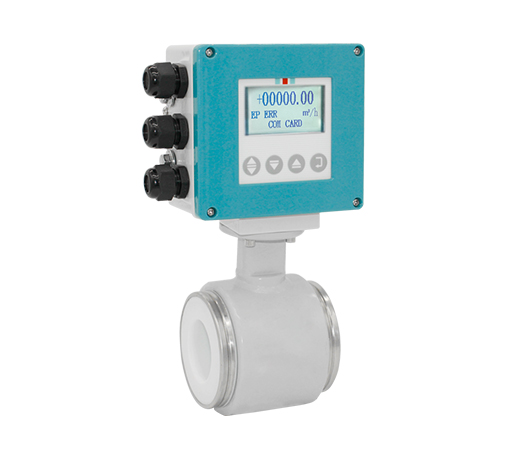
In terms of installation and cost, magnetic flow meters generally have a lower initial price and are easier to install, especially in large pipe sizes. Insertion-style mag meters or thermal types, like the insertion thermal mass flow meter, offer economical solutions for large ducts or pipes where full-bore installation isn't practical . Coriolis meters, while more expensive, deliver unmatched accuracy for mass flow, making them worth the investment in critical batching or custody transfer applications.
Another key consideration is temperature and pressure tolerance. Coriolis meters can handle a broad range of temperatures and pressures but may have limitations depending on the tube material and design. For high-temperature liquid applications, such as steam or hot oils, specialized solutions like the high temperature flow meter may be more suitable . Mag meters typically use rubber or PTFE linings, which can degrade under extreme heat, limiting their use in very high-temperature environments.
Maintenance is another area where these technologies differ. Coriolis meters have moving parts (the vibrating tubes), which can be prone to wear over time, especially in abrasive or slurry-laden fluids. Mag meters have no moving parts and are therefore more durable in dirty or corrosive applications, provided the liner and electrode materials are properly selected .
In summary, Coriolis flow meters excel in accuracy and versatility for clean fluids where mass flow is critical. Magnetic flow meters are better suited for conductive liquids, especially in large-scale or wastewater applications where cost and reliability are top priorities. Understanding your process needs will help you choose the right technology for long-term success .

Comments
Post a Comment